
A plan you can hold, not a plan in a chart.
Most patients have a care plan. Almost no family has ever seen it. Ours gets printed and left in the house, typically on the fridge, because a plan that lives in an EHR helps nobody at 9pm when something looks wrong.
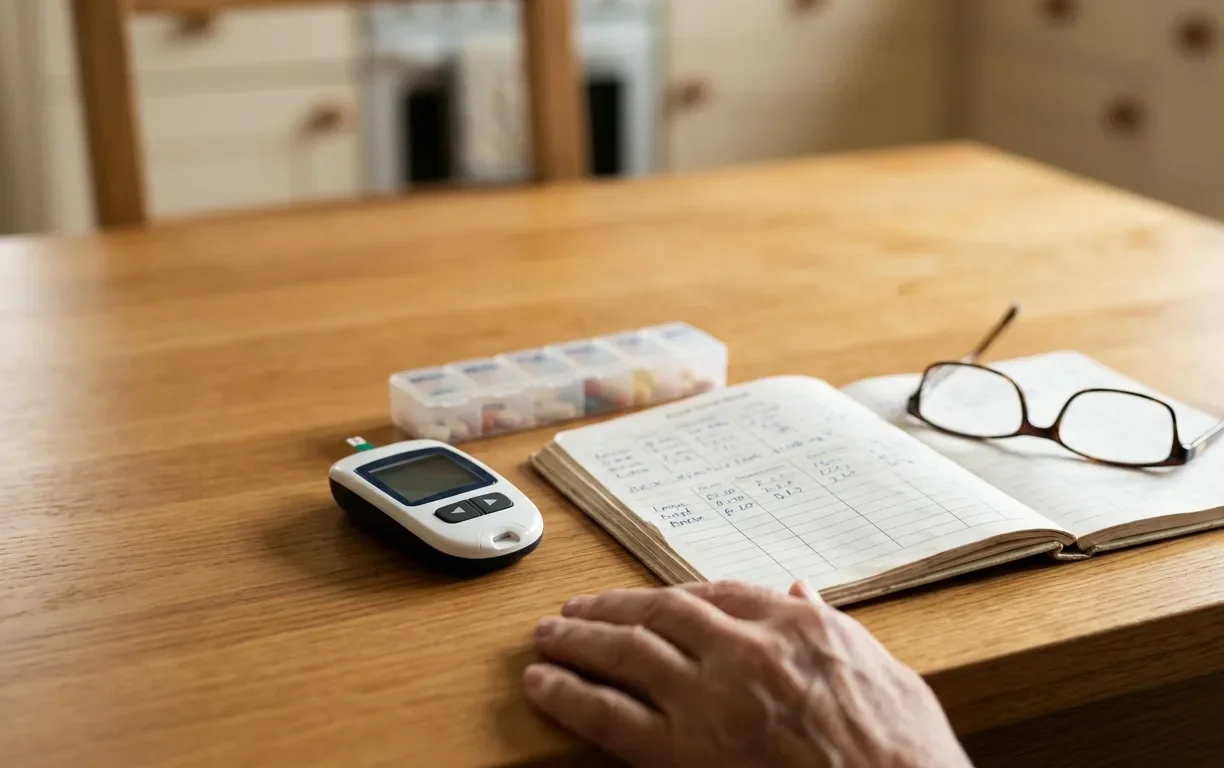
What’s on it.
One page, plain words, updated at every visit. The daughter who found it on the fridge at midnight should be able to act on it.
- What we're managing, and the target for each
- Every medication, why she takes it, and what it looks like
- What to watch for, and the number for each level of concern
- What we're doing next, and when
- Who else is involved and how to reach them
Built around the condition.
Glucose targets, foot checks, eye and nutrition referrals, therapeutic shoes.
Daily weights, fluid limits, the specific numbers that trigger a call.
Inhaler technique reviewed in person, oxygen eligibility, breathing plans.
Home hazard walkthrough, medication review, PT and equipment.
Common questions
How the care works
The ones that come up on nearly every first call.
Still unsure? Call (872) 260-0204 and describe an average morning.
Get started
The next appointment doesn't have to be a production.
Tell us what is going on and we will tell you honestly whether we are the right fit. If we are not, we will say so.